How to Build a Digital Marketing Strategy from Scratch in 2026
A Step-by-Step Blueprint to Grow Your Business Online Systematically
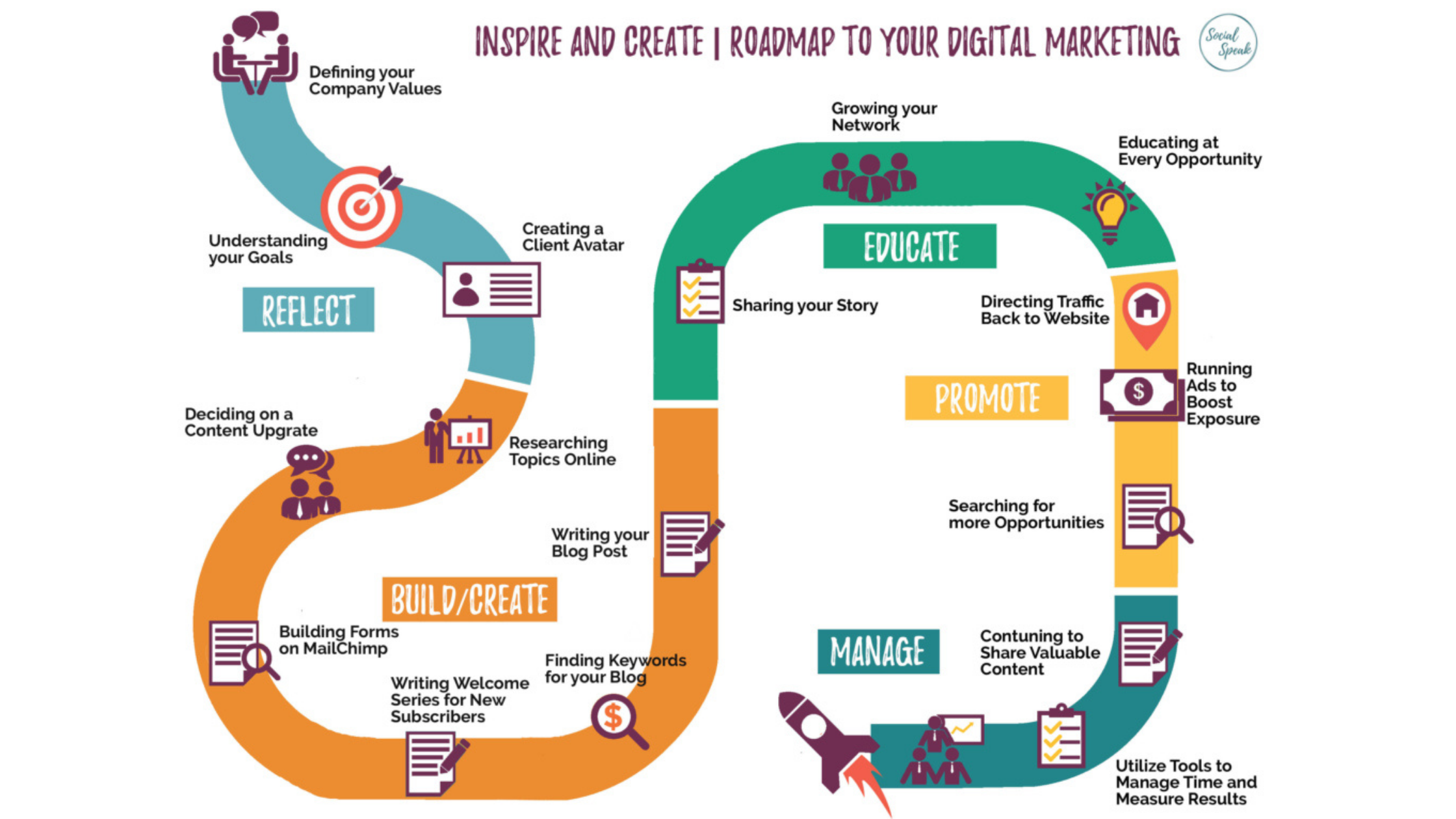
A data-driven digital marketing strategy connects every channel, audience, and campaign to a clear business outcome.
Why Most Digital Marketing Strategies Fail
Most businesses approach digital marketing as a collection of disconnected tactics — a social media post here, a Google Ad there, an email blast when revenue slows down. This fragmented approach is the number one reason marketing budgets are wasted and growth plateaus.
A real digital marketing strategy is a unified system where every channel, every piece of content, and every campaign serves a defined objective. It is built on data, guided by audience insights, and measured against clear business outcomes. Here is how to build one from the ground up.
Step 1: Define Your Business Objectives
Marketing strategy without business objectives is decoration. Start by defining what business success looks like for the next 12 months. Specific, measurable objectives — 'generate 500 qualified leads per month by Q4' or 'grow organic revenue by 40% year-over-year' — give your marketing decisions a clear north star. Every tactical decision should connect directly to these objectives.
Step 2: Build Deep Audience Personas
The more precisely you understand your ideal customer, the more precisely you can reach, speak to, and convert them. Build data-driven buyer personas that document: demographics, professional context, primary goals, key challenges, information sources, and purchase triggers. Use customer interviews, CRM data, and social listening to validate your assumptions with real evidence rather than guesswork.
Step 3: Audit Your Current Digital Presence
Before adding new channels or tactics, understand what you already have. Audit your website (traffic, conversion rate, technical health), existing content (what ranks, what converts, what is wasted), social media channels (audience quality, engagement rates), email list (size, health, engagement), and paid advertising (spend, ROAS, efficiency). This baseline reveals your highest-leverage opportunities.
Step 4: Define Your Unique Value Proposition
Your UVP is the foundation of all messaging across every channel. It answers: why should your ideal customer choose you over every alternative? Craft a UVP that is specific, believable, and relevant to your audience's primary challenge. Generic claims like 'we deliver results' are invisible. Specific claims like 'we help B2B SaaS companies reduce CAC by 30% in 90 days' earn attention.
Step 5: Choose Your Core Channels Strategically
Spreading effort across every channel means winning on none. Select 2–3 primary channels based on where your audience spends time, where your strongest competitive advantage lies, and which channels align with your budget and team capacity. Achieve mastery on your primary channels before expanding. Depth always beats breadth in early-stage marketing strategy.
Step 6: Build Your Content Engine
Content is the fuel that powers every digital marketing channel — SEO requires it, social media runs on it, email marketing depends on it, and PPC is strengthened by it. Build a content strategy anchored in keyword research, audience intent mapping, and a realistic production schedule. One high-quality piece published consistently beats ten mediocre pieces published randomly.
Step 7: Implement Your Measurement Framework
Define your key performance indicators before you launch any campaign. Connect your measurement stack: Google Analytics 4, Google Search Console, CRM attribution, and ad platform reporting. Set up conversion tracking for every meaningful action on your site. Review performance weekly, analyze trends monthly, and make strategic adjustments quarterly.
Step 8: Test, Learn, and Iterate
No marketing strategy survives first contact with the market unchanged. Build systematic A/B testing into your workflows — test landing pages, ad creative, email subject lines, and content formats continuously. Document your learnings and apply them to subsequent campaigns. The compounding advantage of a learning organization is the most durable competitive moat in marketing.
Your Strategy Is Ready. Now Execute.
The gap between a great strategy and great results is disciplined execution. Assign ownership for every channel, hold weekly performance reviews, and protect your team's time from distractions that don't connect to your core objectives. Strategy gives you direction — execution delivers results.
Ready to build your digital marketing strategy from the ground up?
The gap between a great strategy and great results is disciplined execution. Assign ownership, review performance weekly, and protect your team's time for the channels that matter most.
Build your strategy ↗More Articles
Keep reading — explore more insights from our blog



.png)
.png)
.png)
.png)